UMI Member Artists

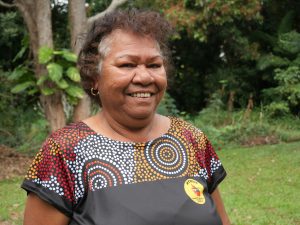
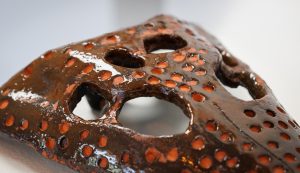
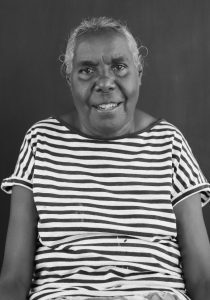
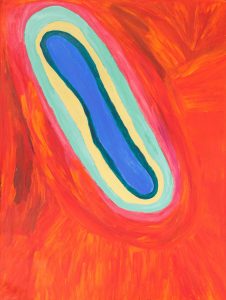
UMI Arts provides opportunities for over 1000 First Nations members to participate in an ever-changing, evolving, exciting and unique visual art, craft, dance, music programs and activities. Members who participate in UMI Arts programs leave with new skills, knowledge, and strengthened confidence with many going on to maintain a sustainable cultural business or gain meaningful employment in the creative industries sector.

EXPLORE THE STORIES AND GET TO KNOW OF SOME OF OUR 2000+ MEMBER ARTISTS!

Take a virtual tour through our past exhibitions and featured artists through our EXHIBITION CATALOGUES, browse our 2023 ARTIST GUIDE, or meet some of our most senior and established artists below…

UMI Arts Alumni
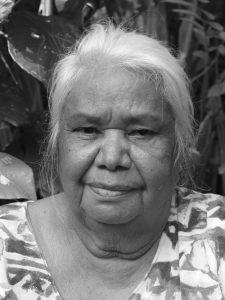
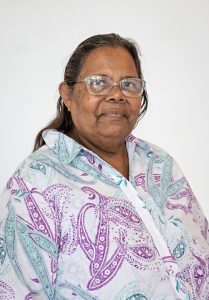
Artist Wanda Gibson

Wanda GIBSON

Guugu Yimithirr / Nugal Warra
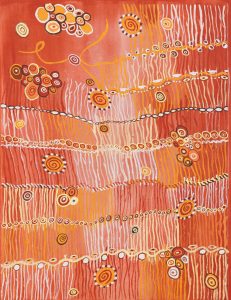
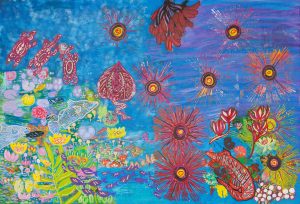
Magarr by Wanda Gibson
Wanda, born in 1946 in Woorabinda, is a proud member of the Nugal Warra clan group. A fluent speaker of Guugu Yimithirr, she embodies her heritage through her totems: Thuka (Goanna) on her father’s side and Waandarr (White Cockatoo) on her mother’s side. Wanda is an important elder within the Nugal Warra clan. Her ancestors were all artists, with her father skilled in crafting fish nets and building boats, while her mother and aunts excelled in weaving. In 2001, Wanda joined the Gamba Gamba group (senior women) at the culture centre, igniting her passion for art, inspired by her family’s story and traditions. The women possess invaluable cultural knowledge concerning family kinship systems, sacred sites, esoteric characters, and totems. They are deeply committed to documenting language and traditional stories, ensuring this cultural heritage is passed on to future generations. Wanda has established herself as one of the longest practicing artists at the art centre. She skillfully paints on linen canvas using acrylics and is a talented weaver and master dilly bag maker. She also creates unique jewellery and designs textiles, further enriching her cultural expression.
Artist Robert Tommy Pau

Robert Tommy PAU

Meriam / Erub Samsep
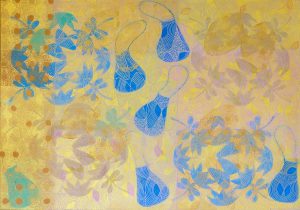
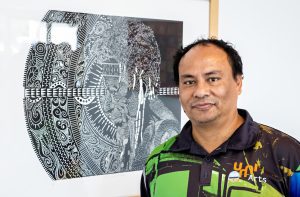
Island Basket painting by Robert Tommy Pau
Tommy was born in Townsville in 1967. He was raised in the Torres Strait and the Australian mainland, and his artworks reflect his cultural experience and urban lifestyle. His involvement in arts and culture has been a lifelong experience, learning cultural practices from his father to keep culture strong. Tommy speaks Torres Strait Creole. His family and cultural influence were focused on conservative cultural values called Pasin. Throughout his artistic career he has been fascinated by comic hyper realism and religious art. While completing a Certificate in Art at the Cairns TAFE, Pau developed a strong network within the arts industry engaging with reputable mentors and colleagues. His print works are held in the Art and Object collection at AIATSIS (Australian Institute of Aboriginal and Torres Strait Islander Studies) Canberra and the Museum and Art Gallery of the Northern Territory (MAGNT). His artwork uses symbolism relevant to the subject. He is keen to explain his artistic expression as a contemporary urban artist and enjoys mixing his views on political movements with traditional storytelling.
Artist Wanjibung Edwards

Wanjibung EDWARDS

Kokoberrin
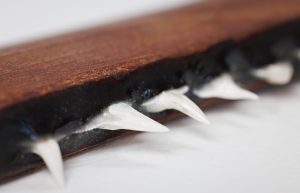
Shark Tooth Knife by Wanjibung Edwards
“I am Ma Wanjibung. Pa la Nganduw Kedew, Dingo Clan of the Kokoberrin People, Staaten River, Cape York. I acknowledge my thangk, ancestors who lived for warrék, hundreds of thousands of years evolving under the starlight of the patháliy ngamáyvrr with their place, with their walngk, feelings, with their story, pínganvm, with their lore/law, bora, yirral. I acknowledge my thangk buried on country at Pinnarinch, Inkerman Station in Cape York.”
Wanjibung is an established visual artist and an active advocate for Indigenous people, especially those of the Central Western Cape York Region. In addition to holding many professional positions, Wanjibung is an important Kokoberrin leader and artist for the Cape York region. His artwork is about his homeland, its creation, and its story. Being an artist is part of his culture. His art is born in the country. It is part of the country. Wanjibung’s works are held in international collections, including the NSW Art Gallery, the ANU Art Collection, the Cairns Regional Art Gallery Collection, and many private institutions.
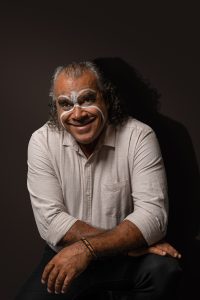
David Hudson

David Bindi HUDSON

Ewamian / Western Yalanji
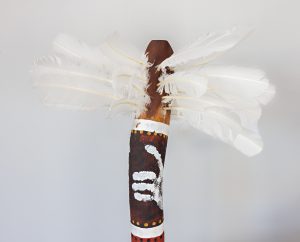
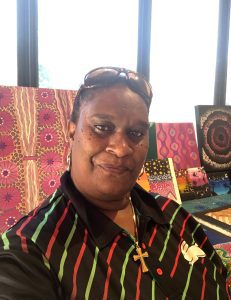
Spirit Pole by David Hudson
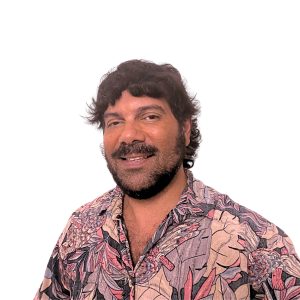
David was born in Gimuy (Cairns), Queensland in 1962. He is a respected elder of the Ewamian cultural group, located southwest of Gimuy (Cairns), and the Western Yalanji cultural group, found northwest of Gimuy (Cairns). With a profound appreciation for cultural heritage, music, dance, and traditional customs, David has dedicated his artistry to preserve and disseminate Indigenous knowledge. His strong bond with his country and ancestors is vital in ensuring that cultural traditions remain vibrant and accessible to future generations. David began his artistic journey at a young age, initially engaging in music and performance before expanding into visual arts. His enthusiasm for culture and creativity has led him to work with various mediums, including painting, woodworking, and mixed media. Currently, David focuses on wood sculpting, painting, and mixed media, exploring themes of connection to country, ancestral knowledge, and the evolution of cultural storytelling. Among his notable works are the Spirit Poles, sculptural transformations of didgeridoos that integrate traditional ochre, feathers, and intricate carvings. D
Sandra Ase

Sandra ASE

Taepathiggi
Artwork: Scar Trees

Sandra is a proud and respected member of the Taepathiggi clan, a community with deep roots in the land. She was born in the beautiful and scenic town of Townsville, surrounded by nature’s beauty. Her background is rich with the traditions and stories of Aboriginal and Torres Strait Islander peoples. Through her paintings, she captures the spirit of her people and their land. Sandra’s artwork is full of vibrant colours and detailed scenes. Each piece tells a story from the Mapoon people, a community with its own rich history. Her paintings show how her people live close to the land and care for it. She depicts the places they call home, like sacred sites and common gathering spots. To her, every brushstroke helps preserve her cultural heritage and traditional ways of life. Her work also features totems. These are symbols that connect her people to their ancestors and protect them. Her paintings serve as a way to keep traditions alive, especially for children. She believes her art holds the power to pass on her people’s identity from one generation to the next.
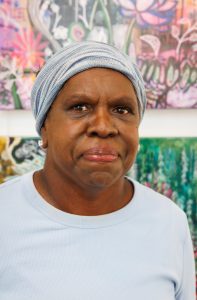
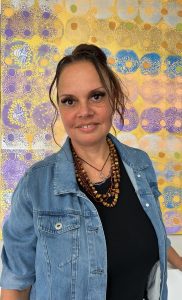
Portrait photograph of Marilyn Kepple in front of her artwork

Marilyn KEPPLE

Kokoberrin
White Cockatoo feather head-dress by Christopher Henry

Marilyn Kepple is a WIK Mungkan woman based in Coen in Cape York, with ancestral ties to the Winchanum, Ayapathu, and Lama Lama Clans. Her strong connection to Country—shaped by childhood experiences of camping, fishing, hunting, and gathering natural materials with her family—continues to guide her artistic practice. Since commencing printmaking in 1998 and completing a Diploma in ATSI Visual Arts at TAFE Cairns, Marilyn has worked on Country in community, drawing ongoing inspiration from the stories, traditions, and landscapes of her homelands. She has served on various Boards and has been an active member of UMI Arts for several years, participating in its Side by Side workshops and exhibitions. Marilyn brings deep cultural knowledge, community insight, and extensive experience, making her a highly valued member of our Board.
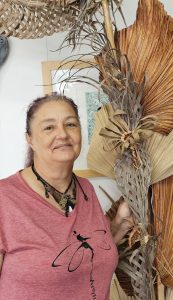
Artist Sandra Scott

Sandra SCOTT

Bundjalung / Guguu Yimithirr
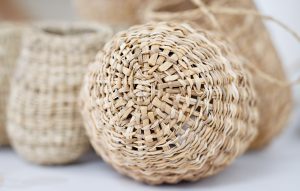
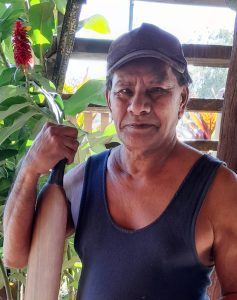
Close up of woven baskets by Sandra Scott
Sandy lives and works in Kuranda, a well-known location that attracts many visitors for its vibrant arts scene and natural beauty. She is proud to be part of the Bundjalung and Guggu Yimithirr Clan groups. From a young age, Sandy was drawn to art. Her early interest in art helped her develop a deep love for creative expression. Over the years, she found ways to channel her talents into many different forms of art and craft. After her children moved out of home, Sandy decided to focus fully on her art. During this time, she dedicated herself to developing her talents and exploring new techniques. Creating art became her way to share her stories, culture, and personal feelings. Her work often reflects her cultural background, with symbols and styles inspired by her Clan groups. Sandy is skilled in weaving traditional items like mats and baskets, using natural fibers with intricate patterns. Painting is another passion, where she often uses bold colours and strong lines. Her dedication to learning new techniques pushes her to grow as an artist. She is always looking for better ways to express herself and bring her ideas to life. Her art starts conversations and helps others understand her culture.
Portrait of artist Michael Anning

MICHAEL ANNING

Yidinji / Dulgu-barra
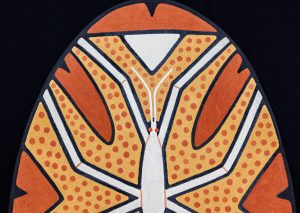
Upper part of traditional shield with waterstrider design in ochre, red, white and black
Michael first gained inspiration from historical Yidinji shields and Firemakers and was the foremost Indigenous artist to revive the unique tradition in 1989. His designs on shields and Firemakers are imbued with up to seven different ochre colours found in Yidinji country to depict totemic designs that demonstrate cultural continuity. His works are held in both public and private collections across Australia.His shields and firemakers are more than just art; they are symbols of identity and cultural pride. They often feature earth tone made from natural ochres. Michael uses up to seven different shades of ochre, carefully chosen from the lands of Yidinji country. These ancient pigments come from the earth itself. They are rich in history and hold special meaning for his community. Each color is selected to represent different aspects of their beliefs and environment.
Artist Shenane Jago

Shenane JAGO

Kurtijar
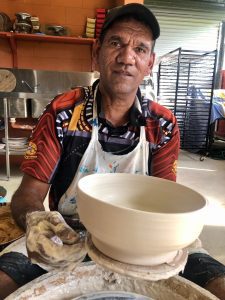
Close up of Shenane Jago's ceramic 'norgin' (crocodile)
Shenane is a proud Kurtijar woman, living and working in Normanton, in the Gulf of Carpentaria, Queensland. Shenane has been creating arts for over ten years, and in 2022 she launched her first solo exhibition “My Country of the Norgin” at UMI Arts Gallery in Gimuy (Cairns), a mark of graduation of UMI Arts’ Exhibition Ready program. Shenane has incorporated into her work her understanding of the importance of Indigenous art and its role in storytelling and the preservation of culture. Shenane has become a leader in the arts, mentoring and developing other artists in the lower Gulf region, young and old. She has also continued to work on her own art practice, pushing her ceramics skills further and teaching herself to paint. Each piece is unique, and celebrates the landcape she is surrounded by. “I wish to give people a taste of the country in the Gulf where I am from and grew up. My art is inspired by the environment, colours, and animals of my country. Food sources are respected and treated with pride, and as part of country. My country is beautiful, wild and respected.”
Artist Dorothy Gabori

Dorothy GABORI

Kaiadilt
Painting by Dorothy Gabori
Dorothy was born in 1959 on Gununa Mornington Island. She belongs to the Kaiadilt Cultural group and speaks the Kayardild language. Her totem is Dibirdibi. “I am the fifth child of my Mother Sally Gabori. My Father was Pat Gabori, he was a hunter, a hard-working old fella. We used to go bush with our parents who taught us a lot about our homelands both Bentinck Island and Sweers Island.” Dorothy works with her sister and the rest of the family in the Mornington Island Art Centre. She learns a lot about her land and country from older people. Dorothy started painting with her mother, Sally Gabori. She learned everything about painting from her mother, keeping her legacy strong, respectfully and with love. Her art is full of inspiration and love for her father and mother’s country. She uses shapes and motives to visually represent and share stories about essential and powerful places in her country. Dorothy feels responsible for protecting her heritage from loss and uses her artistic talent to honour her land and nations, just as her parents and ancestors did. Her love for art is bonded with her passion for her land.

Meet the artists…

Dorothy Edwards

Dorothy EDWARDS

Kokoberrin
Painting by Dorothy Edwards
Dorothy is a skilled Kokoberrin artist from the Western Cape York Peninsula in Queensland. Her ancestral lands, known as Pinnarinch stretches from Mudpalangen to the mouth of the Staaten River area, encompassing the Barku, Nassau, and Lynd River regions in the central west coast of Cape York Peninsula. Pinnarinch is a region of stunning beauty and remoteness, rich in significant clan story sites. From a young age, Dorothy has demonstrated a passion for art, instilling the same love in her children and grandchildren. Her vibrant artworks serve as joyful reflections of both traditional and contemporary life in North Queensland. Whether capturing the essence of gathering bush tucker or spending time on country, Dorothy’s deep connection to her culture shines through her creations. In recognition of her talent and dedication, Dorothy was honoured with the prestigious Laura Art Award in 2012 for her exceptional piece “Waterloo”. Dorothy’s devotion to producing new artwork and sharing stories consistently captivates audiences.
Wayne Connolly

Wayne CONNOLLY

Kuku Yalanji / Kuku Taipan
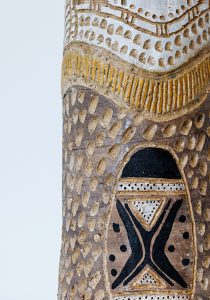
Close up of ceramic in yellow ochre, black and white shield design by Wayne Connolly
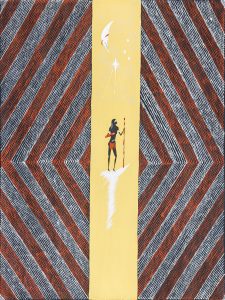
Wayne is an emerging Indigenous artist from Yarrabah, Queensland. His artistic practice is heavily influenced by his rich cultural heritage and family history, which spans multiple Indigenous groups and regions. Wayne’s family history is also marked by stories of resilience and survival. His grandmother was forcibly taken as part of the Stolen Generation, a tragic chapter in Australian history. Wayne primarily focuses on painting animals, fish, and the natural landscapes vital to his life. His work captures the essence of the land and sea surrounding Yarrabah and the stories shared by the community’s elders. Often, Wayne’s art reflects experiences of traditional living, including hunting, fishing, and gathering bush food—activities that continue to play an important role in his everyday life. His work is not only a personal exploration of his cultural identity but also serves as a celebration of the beauty and richness of Yarrabah’s natural environment.
Artist Joelene Madar<br />
ROUGHSEY

Joelene Madar ROUGHSEY

Lardil Langungangi / Sydney Island
Painting by Joelene Madar<br />
ROUGHSEY
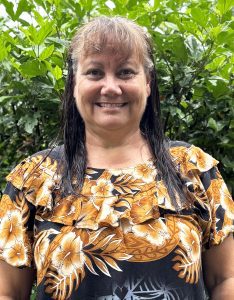
Joelene is a proud Lardil woman and belongs to the Langunanji clan. Her Language name is Madar meaning the stem of the water lily swaying in the breeze. Her Father is Leon Roughsey, the son of Tim Roughsey, brother of the famous artist and author Dick Roughsey. She grew up on her father’s homeland of Ganthawu. Her younger years were spent playing with her friends and siblings out bush; learning how to find food from the land. She also spent a lot of time with her grandmother during her early years. Joelene attended boarding school in Darwin for a couple of her high school years. Joelene is an accomplished painter and is part of the next generation of Lardil artists. Many of Joelene’s pieces have been inspired by the work of her famous grandfather Goobalathaldin Dick Roughsey (1920-1985). Her work depicts traditional stories and cultural practices. Joelene is also a dancer with the Mornington Island Dancers. Joelene’s daughter was born in 2012 who she is raising girl to be strong and proud. She is determined to keep culture strong, and is passionate about sharing Lardil stories and culture with her daughter and nieces.
Artist Kassandra SAVAGE

Kassandra SAVAGE

Waanyi / Kurtijar
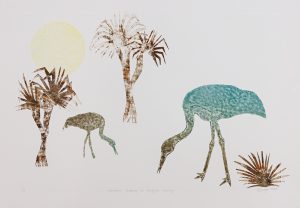
Print by Kassandra Savage
Kassandra was born in Cloncurry. She takes pride in belonging to the Waanyi and Kurtijar cultural croups and currently lives and works in Cooya Beach. With a family history that connects her to Mapoon and the Stolen Generations, Kassandra draws strength from her heritage. Her grandmother’s parents were taken to Mapoon, her great-grandmother was Waanyi, and her greatgrandfather was taken from Normanton, where she still searches for her deep heritage. Since 1990, Kassandra has pursued her passion for art beginning with using acrylics on wood, lamps, canvas and making black ink drawings on paper. In 2009, she furthered her artistic journey by exploring printmaking techniques (etching, linocut, monoprint, dry point, screenprints and lithography) and incorporating more acrylic on canvas. Her artwork celebrates her rich family roots and features themes of brolgas, plain turkeys, fish, barramundi, yabbies, and turtles, reflecting her deep connection to the land and her ancestors. As a qualified Early Childhood Teacher, Kassandra has significantly contributed to education. While living in Weipa, she completed an Art Certificate at TAFE and showcases her artwork with UMI Arts amongst other galleries.
Michelle YEATMAN

Michelle YEATMAN

Gunggandji
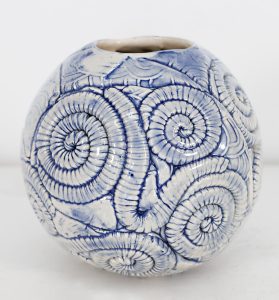
Ceramic Sphere in blue and white by Michelle Yeatman

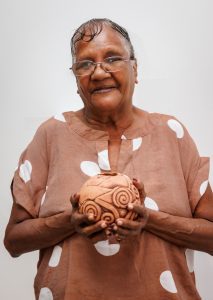
Michelle “Mickey” is a highly regarded contemporary ceramic artist from the Yarrabah Arts & Cultural Precinct. Born and raised in the Yarrabah community, Michelle’s work is deeply connected to her cultural heritage and the natural beauty of the environment that surrounds her. Michelle’s work is heavily inspired by the shoreline, beach, and water of Yarrabah. Influenced by the renowned Indigenous artist Dr Thancoupie Gloria Fletcher James AO, Michelle has developed a unique style that combines traditional forms with contemporary design. While ceramics is her primary medium, Michelle is also an accomplished painter, screen printer and printmaker, demonstrating her versatility and deep creative spirit. Michelle’s art not only reflects her personal connection to her land and culture but also serves as a contemporary expression of the rich artistic traditions of Yarrabah. She continues to inspire and contribute to the preservation and evolution of Indigenous art in Australia.
Kel WILLIAMS

Kel WILLIAMS

Guguu Yimithirr / Ugar (Stephen Island)
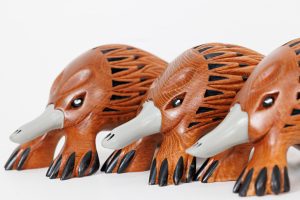
Echidna Carvings by Kel Williams (three in a row from the side)
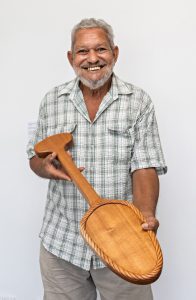
Kel was born in 1956 in Gimuy (Cairns). He is a distinguished artist, with his Clan group being Guguu Yimithirr. His totem is the Black-Faced Kangaroo. He commenced learning the art of carving at the age of 10 from his parental grandfather from Thursday Island, who wood-carved. His grandfather specialised in carving fish, but Kel preferred carving Aboriginal figures and Australian native animals. After completing his apprenticeship in New Zealand in the mid-tolate 1970s, Kel returned to Australia and commenced working in the boat-building industry in Gimuy (Cairns) and Innisfail. In 1993, he gave up his full-time employment and started his own business as a professional woodwork artist. Kel started by carving native birds and animals and branched out into making boomerangs and didgeridoos. Onto the boomerangs and didgeridoos, he developed and carved intricate designs onto contemporary Aboriginal art. In 2004, Kel completed Certificate in Training and Assessment, which allowed him to teach wood carving in many remote Aboriginal and Island communities. Kel’s carvings have been exhibited in many exhibitions across Australia.
Artist Lisa Michl Ko-Manggen

Lisa MICHL KO-MANGGÉN

Kokoberrin
Print by Lisa Michl Ko-Manggen
“I am Ko-manggén. Pa la Nganduw Kedew (White Dingo Clan) of the Kokoberrin People, Staaten River, Cape York”. Lisa’s ancestral homelands, known as Pinnarinch, stretch from Mudpalangen to the mouth of the Staaten River area, encompassing the Barku, Nassau, and Lynd River regions in the central west coast of Cape York Peninsula. Lisa began her involvement with UMI Arts two decades ago and is recognised as one of the founding Board Members. With the guidance of Senior Elders who were instrumental in establishing the organisation, she remains dedicated to preserving their vision within its framework. Over the past 26 years, Lisa has exhibited her artwork in 17 solo exhibitions at prominent commercial galleries and over 80 group exhibitions nationally and internationally, including in Europe, the United States, the Pacific Islands, and the Caribbean, proudly representing Australia’s First Nations peoples. Through her remarkable artworks, Lisa interprets and conveys the cultural lifestyle, language, stories and lore of her Kokoberrin people, showcasing her heritage and artistic vision. Lisa Michl Ko-manggén was awarded the First Nations Artist Prize at the 2025 Blacktown City Art Prize, and was selected as a finalist in the 2025 Telstra National Aboriginal and Torres Islander Art Awards.
Artist Priscilla Major

Priscilla MAJOR

Kokoberra
Painting by Priscilla Major
Priscilla, known by her bush name Ma Cheltrulalie, is a proud Kokoberra woman and cultural custodian of the Mitchell River region of Cape York. Born at Dunbar Station, a cattle station near Kowanyama, Priscilla belongs to the Lightning, Sour Yam, and Shark clan groups, with the Shark as her spiritual totem symbolising strength, instinct, and connection to the sea. A fluent speaker of her language, Kokoberra, and neighbouring groups, Priscilla is deeply grounded in ancestral knowledge, including traditional customs, ceremonies, and the experience of living, hunting and understanding ancestral connection to path ngatherruw, our land. Her creative and cultural contributions have been featured in significant events such as the Story Place Exhibition in Brisbane, the Dreaming Festival on the Sunshine Coast, and the Cairns Indigenous Art Fair (CIAF). Since becoming a Director of UMI Arts in 2005, Priscilla has shared her knowledge to empower younger generations. Her work is a call to remember, reconnect, and honour the old ways, ensuring that language, law/lore continue to inspire and guide the future. Ma Cheltrualie is the name founder of Umi’s Big Talk One Fire.
Artist Shane Gibson

Shane GIBSON

Guugu Yimithirr / Thuubii, Bindhi and Bulgun warra
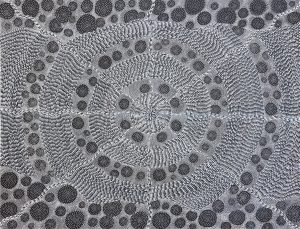
Guti by Shane Gibson
Shane, also known as Aka Dhuga, was born in Gimuy (Cairns) in 1973. He is a local artist from Hopevale (Guumba) and a member of the Bulgun, Thuubi, Dhaarrba, and Bindhi clans of the Guugu Yimithirr nation. Growing up in his traditional homeland, Shane received the name Dhuga from his great-grandfather Ngamudhuga, passed down through his grandmother, Nancy Bowen. His totems include Ngamu (dingo), Mirrki (owl), and Gaalaya (centipede). Shane’s cousin, Harold Bowen, significantly influenced him, encouraging him to express his stories through painting. He draws his greatest inspiration from telling stories about fish and sea animals. Although Shane is an accomplished musician and didgeridoo player, he has only been painting for a few years. He quickly gained recognition as a respected artist, sharing his own story and that of his family, focused on the local landscape and ancestral memories. Shane is passionate about telling his stories and passing them on to his children and the next generation. As a loving father of two daughters, he hopes to instil in them a love for painting that he has cherished.
Artist Christopher Henry

Christopher HENRY

Kokoberrin
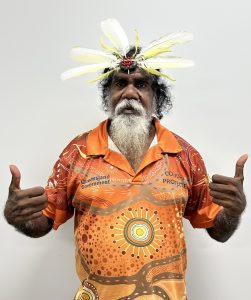
White Cockatoo feather head-dress by Christopher Henry
Christopher “Min mandel” Henry resides in Normanton and is from the Pa la Nganduw Kedew, White Dingo Clan of the Kokoberrin People. In the Kokoberrin language, the name “Min mandel” translates to “Grey and White Fish Hawk,” serving as his totem name. His clan’s story places are the Water Fairy and Lightning. Raised in Kowanyama and Normanton, Christopher spent his formative years learning from elders on traditional homelands. They imparted a wealth of cultural knowledge, including songs, dances, stories, crafts, and hunting techniques. Today, Christopher is a highly respected Elder and community leader. As a cultural custodian, he dedicates himself to passing down stories and traditions to younger generations. Drawing on his experiences, Christopher has created music, paintings, and drawings that reflect his profound connection to country. His artworks have been exhibited at prestigious venues such as the Cairns Regional Gallery and the Cairns Hilton International. Christopher is also committed to preserving his cultural heritage by teaching traditional songs and dances to youth and sharing Kokoberrin culture through his travels.
Edward WILLIAMS<br />
(Munu Wuthuga<br />
Dardakin)

Edward WILLIAMS (Munu Wuthuga Dardakin)

Guugu Yimithirr / Thuppi Warra
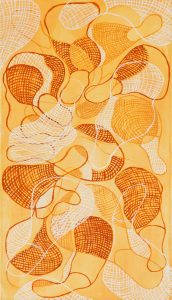
Painting by Edward WILLIAMS (Munu Wuthuga Dardakin)
Edward was born in Rockhampton and is a member of the Thuppi Warra Clan Group. He resides and is professionally engaged in Hopevale as one of the artist members of the Hopevale Arts Centre. Although he began his artistic journey in adulthood, he participated in various cultural and traditional activities within his community during his formative years. The individuals who have profoundly inspired him are his two uncles, who served as significant role models during his childhood. Edward’s artwork reflects his familial heritage, cultural identity, and deep connection to the land and sea, alongside narratives shared by family members and elders who imparted their knowledge and experiences during his upbringing. He actively participates in workshops focusing on textile design and visual arts at the Hopevale Arts Centre. Edward predominantly works with acrylics on canvas.

Are you a First Nations artist with connections to the FNQ region?

UMI Arts is here to support you on your arts journey, wherever you are on your path.

Membership for is FREE for First Nations individuals with bloodline connections to the FNQ region. Find out more about the benefits of becoming a UMI Arts member!